Thursday, July 24, 2025

The Final Post


Part 1: Breaking Down Barriers How AI Made Us More Comfortable with Technology more info


When we first approached Claude and ChatGPT, we experienced the typical researcher's dilemma, fascination mixed with skepticism. Many of us had heard conflicting reports about AI reliability, concerns about plagiarism, and questions about whether using these tools somehow diminished the authenticity of our work.

Our comfort level grew through structured experimentation. We started with low stakes tasks asking Claude to help brainstorm research questions or having ChatGPT summarize articles we'd already read thoroughly. These initial interactions revealed something crucial: AI tools weren't trying to replace our thinking but rather amplify our existing capabilities.

Building Confidence Through Gradual Integration

The turning point came when we realized these AI assistants could handle the mundane aspects of research that often bog down productivity. Claude excelled at organizing complex information into coherent structures, while ChatGPT proved invaluable for generating multiple perspectives on research problems. As our comfort grew, we began incorporating AI into more sophisticated tasks. This gradual integration approach proved essential. Rather than diving headfirst into AI dependency, we built confidence by maintaining control over the process while leveraging AI's computational power. Each successful interaction reinforced our understanding that these tools work best as collaborative partners rather than autonomous solutions.

Part 2: Navigating the Ethical Landscape - When to Use and When to Step Back The website to all


Developing Our Ethical Framework more Websites

Perhaps the most valuable outcome of our AI experiments was the development of a nuanced ethical framework for AI use in research. We quickly learned that the question isn't simply "Should we use AI?" but rather "how can we use AI responsibly?"

Through trial and experience, we established several key principles:

Transparency First: We committed to full disclosure when AI tools contributed to our research process. This meant documenting AI assistance in our methodology sections and being clear with collaborators and supervisors about our AI usage.

Human Oversight Always: We never allowed AI to make final decisions about research direction, interpretation of results, or conclusions. AI became our research assistant, not our research director.

Verification is Essential: Every piece of information, analysis, or suggestion from AI tools required independent verification through traditional sources and methods.

Our experiments helped us identify clear boundaries for AI use. We determined that AI should never be used for making up data or sources, Writing critical analysis without human interpretation, Making ethical decisions about research subjects, and replacing proper citation and attribution practices. Conversely, we found AI extremely valuable for tasks like organizing existing information, suggesting research directions, identifying potential gaps in literature reviews, and helping articulate complex ideas more clearly.

Part 3: Acceleration Without Compromise - How AI Supercharged Our Research Speed 


Quantifiable Time Savings

The impact on our research timeline was dramatic and measurable. Tasks that previously consumed entire afternoons were completed in minutes. Literature reviews that once took weeks were condensed into days without sacrificing comprehensiveness.

Claude proved particularly effective at processing large volumes of text and identifying patterns across multiple sources. We could input dozens of research papers and receive coherent summaries highlighting key themes, contradictions, and gaps in the literature. ChatGPT excelled at rapid ideation, helping us generate research questions, hypotheses, and methodological approaches at unprecedented speed.

Streamlined Workflows

Our research process became significantly more efficient through AI integration. Initial research phases that once involved endless note taking and manual organization were streamlined through AI assisted categorization and synthesis. We developed workflows where AI tools handled the heavy lifting of information processing, freeing us to focus on higher level analysis and creative problem solving.

The time savings weren't just about speed, they were about cognitive efficiency. By offloading routine tasks to AI, we preserved our mental energy for the aspects of research that truly required human insight: interpreting findings, making connections between disparate ideas, and drawing meaningful conclusions.

Part 4: Precision and Accuracy - How AI Enhanced Our Research Quality 


Beyond Speed: Improving Research Rigor

While the speed improvements were immediately apparent, the accuracy enhancements were more subtle but equally significant. AI tools helped us identify inconsistencies in our arguments, spot potential biases in our methodology, and ensure comprehensive coverage of relevant literature.

Claude's analytical capabilities proved invaluable for cross-referencing information across multiple sources and identifying discrepancies that might indicate errors or areas requiring further investigation. ChatGPT's ability to approach problems from multiple angles helped us identify blind spots in our research design and consider alternative interpretations of our findings.

Quality Control Through AI Assistance

We discovered that AI tools serve as excellent "first readers" for research drafts. They could identify unclear arguments, suggest stronger evidence, and highlight areas where our logic might be flawed. This didn't replace human peer review but provided an additional layer of quality control that caught issues before they reached human reviewers.

The accuracy improvements extended to mundane but critical tasks like citation formatting, consistency checking, and ensuring comprehensive coverage of research topics. AI tools helped eliminate the small errors that can undermine otherwise solid research.

Conclusion: The Future of AI-Enhanced Research

Our experiments with Claude and ChatGPT have fundamentally changed how we approach research. These tools haven't replaced human insight and creativity, they've amplified them. We've become more productive, more thorough, and more confident in our research processes while maintaining high ethical standards.

The key insight from our journey is that successful AI integration requires intentionality, ethical awareness, and a commitment to maintaining human oversight. AI tools are powerful amplifiers of human capability, but they require skilled human operators who understand both their potential and their limitations.

As we look toward the future, we see AI not as a threat to research integrity but as an opportunity to elevate the quality and impact of scholarly work. The researchers who learn to ethically and effectively integrate these tools will be better positioned to tackle complex problems, generate innovative solutions, and contribute meaningfully to their fields.

Our advice to fellow researchers considering AI integration is start small, stay ethical, maintain oversight, and prepare to be amazed by what becomes possible when human creativity meets artificial intelligence.


Monday, July 21, 2025

Trail reaction Brown v Board


Reflections on School Segregation Arguments: A Legal and Human Perspective

I was able to listen to arguments in favor and against school segregation. The main two arguments that I picked up on was in favor of the segregation argument they pointed out the fact that the court made past rulings on things that had similar precedent to segregation. So it would make no sense for the court to just completely backtrack everything and just overturn all their past rulings without going back and changing previous rulings.

But then the counter argument was that segregation favored people over others and that was against the Constitution stating that all men are created equal doesn't apply when there is segregation. And the fact that the states put more funding in white schools and black schools doesn't make it equal. And they also argued that times change and courts have overturned rulings before just because they have made rulings that have been more in favor of segregation doesn't mean they have to keep the ruling.

Both sides had good arguments and I really thought it was interesting how they were able to tie in legal arguments but also the human argument of things. Because if there are too many loopholes to a law then the court usually overturns it. And the court fault that there were too many loopholes in the current law so they overturned it in real life and the court said that segregation was unconstitutional. It was a landmark decision and it went against all previous rulings that the court made that have been more friendly to segregation in the past.

I really enjoyed listening to both arguments and how both teams were able to make different style arguments towards certain aspects of the case. And how they added the human side and how they pointed out the loopholes in the laws saying there were too many so the court should overturn it. I just thought it was fantastic and I was really intrigued when I listened to it.


Sunday, July 20, 2025

ETO script for the presentation

The 1968 Jobs March - Fighting for Economic Justice

The Setup

in February 1968. America is literally falling apart. Vietnam War protests, cities burning, and just weeks ago, Martin Luther King Jr. was assassinated in Memphis. But something incredible is about to happen in Washington DC.

King's final dream was coming to life - the Poor People's Campaign. This wasn't about lunch counters or voting rights anymore. This was about ending poverty itself once and for all. 


King's Last Vision

Before he died, King saw the harsh reality. Sure, Black folks could legally eat anywhere now, but what good was that if they couldn't afford the meal? Legal equality meant nothing if you were still broke and jobless.

So he planned something massive - unite poor people from every background and march on Washington demanding economic justice. When King was murdered in April, everyone thought it was over. But Ralph Abernathy said "No way, we're doing this for Martin the movement continued because so many people especially minorities were being taken advantage of in the workforce.

Mother's Day Launch - May 12th, 1968 

Coretta Scott King Martin Luther Kings wife led the first march. Martin's widow walked through DC's poorest neighborhoods, followed by thousands who had nothing left to lose. Black families from the South, white farmers from Appalachia, Native Americans, Mexican Americans - all united by being tired of poverty in the richest country on earth can't afford to pay workers more is ridiculous she stated.

Building Resurrection City

 The commitment of the-protesters dedication . These weren't just protesters who marched and went home. They built an entire city right on the National Mall, between the Lincoln Memorial and Washington Monument. to make a point on what Americans who struggled to pay for basic needs had to live with. 

They called it "Resurrection City." Over 3,000 people lived in tents and plywood shanties for 42 days. Think about that - poor folks camping on America's front lawn, refusing to leave until Congress listened.

They had their own zip code, security force, even a mayor. Every day, delegations marched to government buildings demanding meetings with officials.

What They Wanted what there end goal was

Their demands weren't radical - jobs for everyone who could work, decent income for those who couldn't, an end to housing discrimination, and a $12 billion Economic Bill of Rights. They wanted America to actually live up to its promises they wanted fair equal wages.

The Struggle 

The weather was brutal. Constant rain turned Resurrection City into a muddy mess. Media focused on chaos and complaints from tourists who couldn't visit the monuments. But residents stayed strong, knowing this might be they're only shot to be heard. More info

The End - June 24th

Congress wasn't having it. Politicians complained about the "eyesore" and worried about setting precedents. Police moved in with tear gas and arrests. Resurrection City was torn down, residents hauled away.

The Legacy more about the legacy

Did they fail? Not entirely. Congress extended job training programs, approved millions for Head Start and summer jobs. Small victories, but real ones but we are still fighting wealth inequality and low wages to this day.

but More importantly, they proved something powerful - when poor people organize across racial lines, the whole country has to pay attention.

Why It Still Matters

Resurrection City is gone, but its message lives on. In the richest nation in history, nobody should go hungry, jobless, or homeless.

King's dream of uniting the poor actually worked, even if just for those 42 days. That's still worth fighting for today.

Ai Generated but edited script 

in the heat of Night

In the Heat of the Night: A Masterpiece of Civil Rights Cinema


In the Heat of the Night is a fantastic movie directed by Norman Jewison starring Sidney Poitier, Rod Setiger, and others. Rod Setiger won an Oscar for Best Actor in a Supporting Role for this movie. The movie takes place in the mid-1960s at the heart of civil rights and racism in the South. It takes place in Sparta, Mississippi.


The Story


The storyline follows an African-American police officer from Philadelphia who gets arrested on no evidence for murder. But it turns out he's an expert in homicide for the Police Department in Philadelphia. Rod Setiger plays a very racist and misogynistic police captain in Mississippi, but shows himself not to be the most intelligent person. When he figures out that Sidney Poitier's character, who is Virgil Tibbs, they partner up in an unusual alliance to find the murderer.


Character Development That Amazed Me more info here


What I find most interesting is the character development of Rod Setiger's character who is at first a mean old man who is racist and hates black people, but he begins to respect Sidney Poitier's character when he proves to him that he's not just an idiot and that he's an educated person just because of the color of his skin.


There were times when Sidney Poitier's character, Virgil Tibbs, wanted to leave because he had had enough, but Rod Steger's character convinces him to stay, which would have been inconceivable at the beginning of the movie, where he was just a racist old man who hated African Americans. In the movie, he even stops and saves him from being beaten up by a bunch of Confederate sympathizers. And he doesn't want him to get hurt, so he tells him to leave, but then it's a total reversal because then Virgil Tibbs wants to stay.


Why This Movie Works


Just the storytelling and the dialogue in the movie are incredible, and how it depicts civil rights issues in a detective format, and it goes back to what we're talking about in class about civil rights struggles and what people had to go through, and they tied it into an entertainment movie with two very different individuals. It's just incredible storytelling, and I was blown away by how the movie was, because usually older movies have more dialogue, which makes it less entertaining for younger generations, but the movie did a great job of keeping us engaged.


Deeper Meaning a deeper meaning


Virgil Tibbs' character is interesting because there were so many African-Americans who were super brilliant but did not get opportunities in the South just because of the color of their skin in the South, being refused the same opportunities as white people. And a lot of their talent was never found within them because they weren't given a fair chance, and we talk about that a lot in class when we have our discussions.


Final Thoughts


The movie was just a brilliant piece of film, and how it depicted the period, and how all the characters relate to what we're talking about in class. I enjoyed watching the movie - it was my first time seeing it and I would watch it with other people and recommend it to others.

ETO Reaction


ETO Presentations Reflection

I'm going to be discussing things I found interesting about the ETO presentations that each group discussed.

The Mary Turner Lynching Case

First one I'm going to discuss is the Mary Turner lynching case, which happened in Georgia, where I'm from. Believe it or not, I had not heard of this case before the group presented it in class. I heard briefly about it, but I didn't know it happened in Georgia or anything like that. And how blatantly disgusting and diabolical the whole thing was. It happened in 1918. She was pregnant with a child who did nothing wrong, and they still killed her in her child, disgusting.

Shirley Chisholm's Presidential Bid

But one of the more uplifting things I heard from the other group was the story of Shirley Chisholm, Who was the first African American woman to run for office in 1972 for the Democratic Party. The most interesting thing about her presidential bid was that she was running at a time when Civil Rights was very new, and the civil rights laws of legislation that was passed was recently signed into law.

And when the groups pointed that out, I thought to myself how incredibly Brave she was to run for office at that time. And she paid the way for people to serve in Congress as African-Americans, not because she wanted anything or received any votes, but the fact that she dared to do it. And it paved the way for somebody like Barack Obama, who was the first African American to be elected president. for bravery to run in that time.

Just makes me admire her so much, and the groups did a really good job discussing how she ran at a time period that was considered very polarized due to ongoing racism even though civil rights legislation was signed they were still struggles with it.


Klansville Video


The Rise of "Klansville, U.S.A." - When Hate Takes Root in Unexpected Places

Your description touches on a real historical phenomenon, but I need to correct some factual details. Bob Jones was indeed "the most successful Klan organizer since World War II" who "took over the North Carolina leadership" of the KKK beginning in 1963, and North Carolina's KKK membership did grow to "some ten thousand members, earning the state a new nickname: 'Klansville, U.S.A.'"

However, there are several important corrections to make about the historical context:more context

North Carolina's "Progressive" Reputation

While North Carolina was sometimes called "a supposed bastion of southern-style progressivism", this characterization requires significant context. North Carolina's "progressivism" was relative to other Deep South states, but it was still very much a segregated Southern state with entrenched racial hierarchies. The state's reputation for moderation was largely among white political and business elites who preferred economic development over racial confrontation - not because of any genuine commitment to civil rights.

The Paradox Explained.

North Carolina had "the largest Klan membership-more than the rest of the South combined" during the 1960s civil rights era, which sociologist David Cunningham explored in his book "Klansville, U.S.A." The contradiction wasn't as surprising as it might seem - the state's image of moderation actually created space for the KKK to organize more openly than in states where racial tensions were more overtly violent.

Your broader point is valid: no community is immune to organized hatred, and the veneer of progressivism can sometimes mask or even enable extremist movements. The North Carolina case demonstrates how hate groups can exploit political and social conditions, even in places that pride themselves on moderation.more information here


History Of the supreme court


History of the Supreme Court

Understanding the Supreme Court: The Highest Law of the Land 

The Supreme Court of the United States is one of the most respected and powerful institutions in the country. It started in 1789 with just six justices, but that number fluctuated between five and ten until 1869, when it was set at the nine justices we know today. The Supreme Court’s structure and process have evolved, but its role as the final authority on constitutional matters has remained constant.


How the Supreme Court Works Info Here

The process starts when someone files a petition. Out of thousands of petitions each year, only a handful are chosen for review. A group of nine judges—arguably the most powerful in the United States—hears the arguments and then meets in a private room, with only the justices present, to discuss and vote.


When a decision is reached, the justice who votes with the majority writes the official opinion. Justices who disagree can write their own dissenting opinions. These rulings are critical because the Supreme Court’s interpretation of the Constitution becomes the law of the land. Once the Court makes a decision, it’s final—unless the Court itself decides to revisit the issue in the future.


Landmark Case: Dred Scott v. Sandford

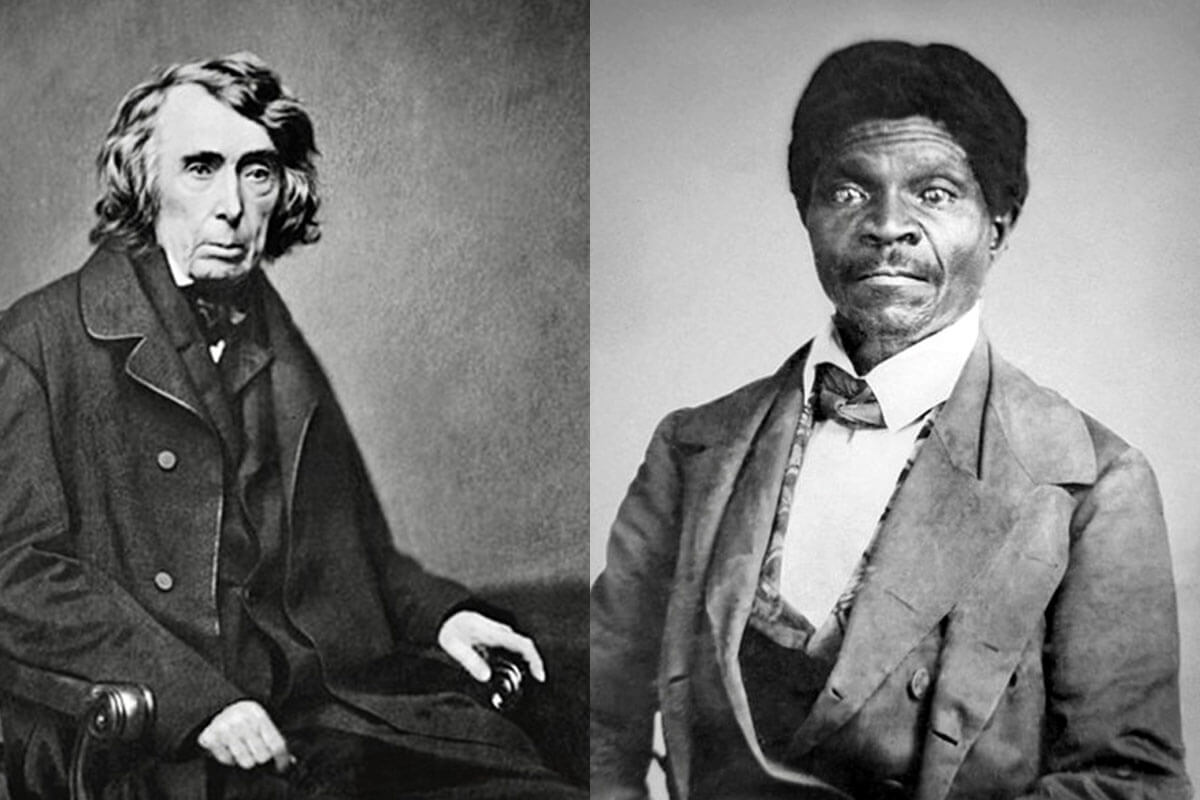
One of the most infamous Supreme Court cases was Dred Scott v. Sandford in 1857. The Court ruled that African Americans were not citizens and therefore could not sue in federal court. This decision is widely considered one of the worst in history. It helped spark the Civil War and inspired the 13th Amendment, which ended slavery.


The Court’s Influence and Legacy

The Supreme Court’s most significant changes came under Chief Justice John Marshall, who served for 34 years. Landmark cases like Marbury v. Madison and Gibbons v. Ogden set important precedents for federal power and judicial review.


The Court decides whether state or federal governments have authority over certain laws and regulations. For example, in recent years, cases like Roe v. Wade have shown how the Court can uphold or overturn major legal precedents.


Appointment and Perception

Justices are appointed for life by the President and must be confirmed by the Senate. The President usually has a shortlist of candidates ready in case a vacancy arises due to retirement or death. While the Supreme Court is supposed to be bipartisan, some argue that justices are loyal to the presidents who appoint them. Still, most Americans believe the Court is fair and strives to put politics aside.


Conclusion


The Supreme Court has existed for nearly the entire history of the United States. It is a complex and highly respected institution that serves as the final word on all court rulings. Its decisions shape the nation, and its legitimacy is rooted in its commitment to upholding the Constitution and ensuring justice for all.


The Long Shadow of Dred Scott: Impacting California Workplaces1,200 × 800